
In the landscape of African educational policy, few initiatives have been as ambitious and transformative as the introduction of Universal Secondary Education (USE) in Uganda. Launched in 2007, this program was a crucial step following the success of Universal Primary Education (UPE) implemented a decade earlier. By dismantling the financial barriers that kept millions of children out of the classroom, Uganda became one of the pioneering nations in Sub-Saharan Africa to commit to free high-school level education.
The policy’s core objective was clear: to significantly increase access to secondary education, particularly for students from economically disadvantaged backgrounds and rural communities. However, over a decade later, the program is a complex case study in the trade-offs between expanding access and maintaining quality.
The Policy Mechanics: How USE Works
The Universal Secondary Education (USE) policy is not simply the abolition of all costs. It operates through a public-private partnership model designed to absorb the massive influx of students graduating from UPE:
- Tuition Abolition: The government covers the tuition fees for all eligible students who pass their Primary Leaving Examinations (PLE).
- Capitation Grants: Both government-owned schools and selected private schools that agree to adhere to government standards and fee structures receive capitation grants for each enrolled USE student. This subsidy helps the schools manage operational costs.
- The Parental Burden: Crucially, while tuition is free, the policy mandates that parents remain responsible for auxiliary costs, including school uniforms, scholastic materials (books, pens), lunch, and sometimes “development fees” or PTA contributions. This “hidden cost” remains a persistent challenge to true universal access.
By extending its reach to participating private institutions, the government significantly and swiftly boosted the available learning capacity without having to fund the construction of thousands of new public schools overnight.
The Transformative Benefits: Access and Empowerment
The impact of USE on Uganda’s social fabric and educational statistics has been undeniable, particularly in its primary goal of expanding access:
- Soaring Enrollment: Following the 2007 launch, secondary school enrollment rates surged dramatically. Before USE, barely 50% of primary school leavers transitioned to secondary school. This figure increased rapidly, giving hundreds of thousands of previously excluded young people a critical educational foundation.
- Empowering the Girl Child: Studies have consistently shown that the financial relief provided by USE disproportionately benefited girls from poor households. Access to secondary education for girls is a proven accelerator of development, leading to delayed marriage and childbirth, increased agency, and better employment prospects later in life.
- Human Capital Development: By investing in the skills and knowledge of its youth, Uganda is building a larger pool of human capital necessary for a modern, industrial economy, directly contributing to the nation’s long-term Vision 2040 goals.
The Persistent Challenges: The Quality vs. Quantity Dilemma
While the sheer numbers are impressive, the implementation of USE has brought several severe challenges to the forefront, creating a complex debate about the quality of the education being provided:
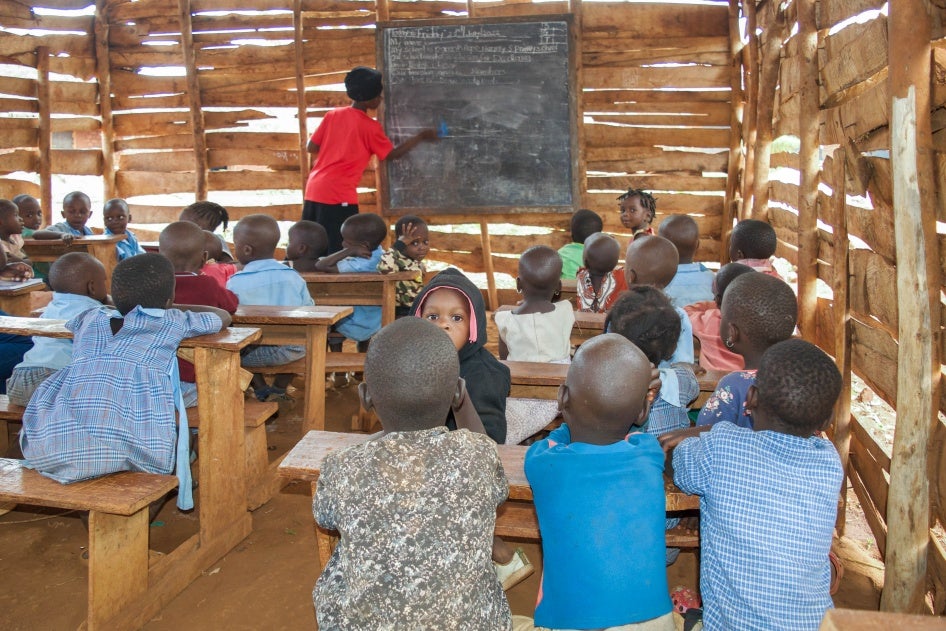
- Overcrowding and Infrastructure Strain: The massive increase in student intake placed enormous pressure on existing infrastructure. Classrooms in many USE schools became severely overcrowded, with some reportedly housing over 100 students per teacher, making individualized instruction virtually impossible.
- Teacher Shortages and Motivation: The supply of qualified teachers could not keep pace with student enrollment. Furthermore, low pay and high workloads in public schools led to issues of teacher absenteeism and a drop in motivation, leading some to take on additional jobs (“moonlighting”).
- The Two-Tier System: The quality gap between fully private, fee-paying schools and overcrowded USE schools has widened. This creates a de facto two-tier system where the wealthy can afford a better standard of education, potentially undermining the policy’s equity goals.
- Financial Strain on Schools: Despite the capitation grants, schools often find the funding insufficient and frequently receive it late, forcing them to depend on the auxiliary fees charged to parents. This perpetuates the cycle of “free but not entirely free” education.
Conclusion: A Foundation for the Future
Uganda’s Universal Secondary Education policy is a monumental achievement in prioritizing education as a public good. It successfully removed the most significant barrier—tuition fees—for millions of young Ugandans, particularly girls, opening doors to better economic and social futures.
However, the next chapter for the policy must be defined by a renewed commitment to quality. Moving forward, the government and its partners must focus resources on improving teacher training, reducing classroom sizes, and investing in infrastructure (laboratories, libraries, and classrooms) to ensure that the promise of free education translates into a high-quality, impactful learning experience for every student. Only then can the foundation laid by USE truly support the aspirations of a rapidly developing nation.