
The global housing landscape is witnessing a dramatic shift. As urban centers become more crowded and the desire for financial freedom grows, many individuals are turning away from traditional, sprawling suburban homes in favor of something much smaller. Constructing a tiny house—typically defined as a dwelling under 400 square feet—is no longer just a trend for nomads; it has become a sophisticated movement focused on intentionality, sustainability, and architectural ingenuity.
Building a tiny home is a profound undertaking that requires a blend of creative design and meticulous engineering. Unlike a standard home, where space can be used somewhat inefficiently, every square inch of a tiny house must serve a purpose. If you are considering embarking on this journey, here is the professional guidance you need to turn a small footprint into a high-functioning sanctuary.
Foundation and Mobility: Choosing Your Base
The first decision in tiny house construction is whether your home will be “stationary” or “on wheels.” This choice dictates the entire engineering process and determines which legal and zoning regulations you must follow.
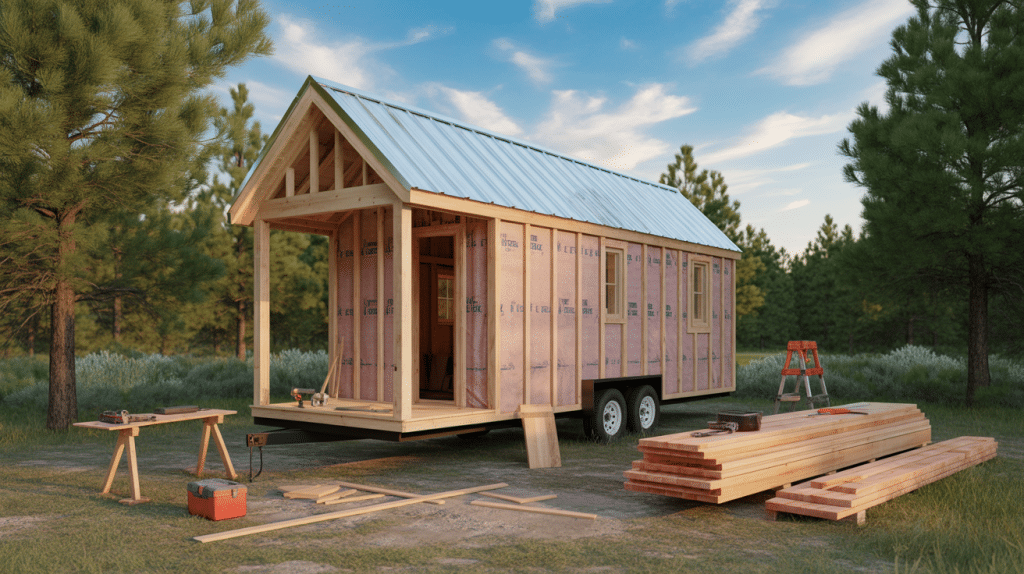
Tiny houses on wheels (THOWs) are built on heavy-duty trailers. This provides the owner with the freedom to move and often allows the structure to be classified as a recreational vehicle, which can bypass some traditional building codes. However, building on a trailer requires precise weight distribution to ensure the home is safe to tow.
A stationary tiny house is built on a permanent foundation, such as a concrete slab or crawl space. These are often subject to local zoning laws regarding minimum square footage. Regardless of the base, the foundation must be perfectly level and robust enough to support the concentrated weight of the loft and heavy appliances in a small area.
Mastering the Layout: The Science of Small Spaces
In a tiny house, the floor plan is the most critical element of the build. To avoid a cramped feeling, successful designs utilize “vertical space” and “multi-functional zones.”
Most tiny houses feature a lofted sleeping area, which frees up the ground floor for living and dining. When planning your layout, consider the “visibility” of the space. Using high ceilings and large, strategically placed windows can create an optical illusion of vastness, preventing the feeling of claustrophobia.
Storage must be integrated into the architecture itself. This includes stairs that double as drawers, “toe-kick” cabinets in the kitchen for flat items, and furniture that folds into the walls. The goal is to keep the floor clear; the more floor space you can see, the larger the house will feel.
Framing and Insulation: Building a Resilient Shell
The framing of a tiny house needs to be lightweight yet incredibly strong, especially if the house is meant to be moved. While traditional wood framing is common, many modern builders are switching to light-gauge steel framing. Steel is lighter than wood, doesn’t warp, and provides superior strength-to-weight ratios.
Insulation is arguably more important in a tiny house than in a large one. Because the interior volume is small, temperatures can fluctuate rapidly. Closed-cell spray foam is often the preferred choice for tiny homes. It provides a high R-value (insulation effectiveness) in a thin profile, and it acts as a vapor barrier while adding structural rigidity to the walls. Proper insulation ensures that your tiny home remains a cozy refuge in the winter and a cool oasis in the summer without skyrocketing energy bills.
Off-Grid Integration and Utilities
One of the primary motivations for building a tiny house is self-sufficiency. Integrating off-grid technology allows you to live in remote, beautiful locations without relying on traditional city infrastructure.
Solar power systems with lithium-ion battery storage are the standard for modern tiny homes. Additionally, water management is a key consideration. Many builders install rainwater collection systems and greywater filtration. For sanitation, composting toilets have become highly advanced, offering a scent-free, waterless solution that eliminates the need for complex sewage connections. If you plan to stay in one place, “shore power” and standard hose hookups can be used, but designing for off-grid capabilities significantly increases the resale value and versatility of the home.
Interior Finishing: Materials and Aesthetics
When it comes to the interior, “less is more” should be your guiding principle, but that doesn’t mean sacrificing style. In a small space, the quality of materials is more noticeable than in a large mansion.
Use light-colored walls to bounce natural light around the room. Natural wood accents can add warmth and prevent the space from feeling clinical. Since you are purchasing fewer materials due to the small size, many tiny house builders find they can afford “luxury” finishes that would be cost-prohibitive in a larger home, such as quartz countertops, custom cabinetry, or high-end hardwood flooring.
Navigating the Legal Landscape
Before you drive the first nail, you must research the legalities. Zoning laws are the biggest hurdle for the tiny house movement. Some areas are very “tiny-friendly,” while others have strict rules against living in structures on wheels or homes below a certain square footage.
Ensure you are building to a recognized standard, such as the International Residential Code (IRC) Appendix Q, which specifically addresses tiny house safety standards. Getting your build certified by a third-party agency can make it much easier to secure insurance and find legal parking or land to settle on.
Conclusion
Constructing a tiny house is a transformative project that challenges our traditional notions of success and comfort. It is a marriage of architectural discipline and a minimalist philosophy. While the process of building in such a small scale is challenging, the rewards are immense: lower living costs, a smaller environmental footprint, and a home that is perfectly tailored to your personal needs.
A tiny house is more than just a building; it is a tool for a different kind of life—one where experiences are prioritized over possessions. By focusing on a solid foundation, an ingenious layout, and high-quality insulation, you can create a small space that offers a big life. As you embark on your construction journey, remember that in the world of tiny living, the only limit is your own creativity.